 (973) 339-3994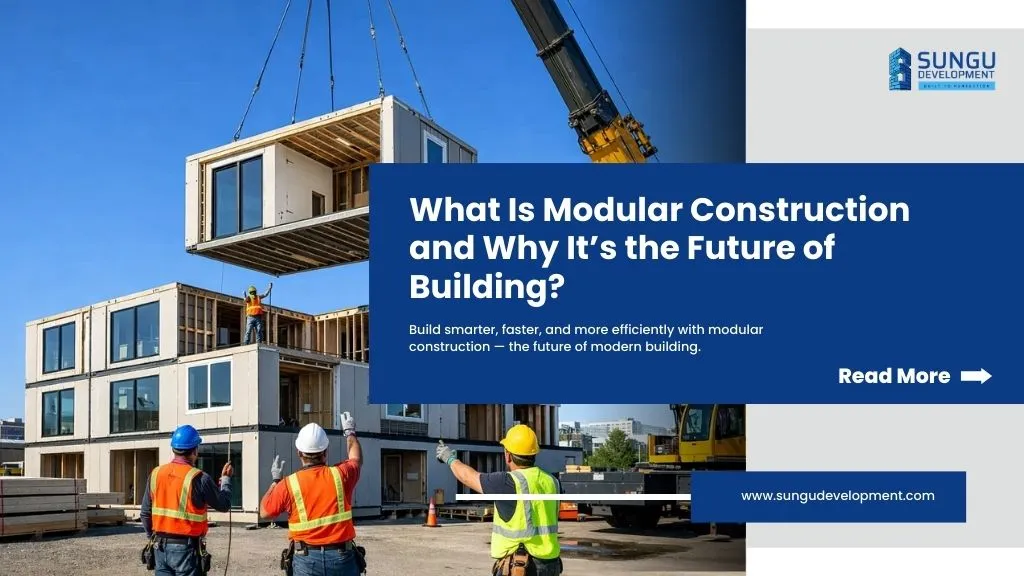
The construction industry is changing. Projects are getting more expensive, timelines are tighter, and finding skilled labor is harder than ever. Because of this, builders and developers are looking for better ways to build.
That’s where modular construction comes in.
If you’re asking what’s modular, how it works, or why so many projects are moving in this direction, this guide explains everything in plain, simple terms. We’ll clearly define modular building, explain what a construction module is, and show why this method is becoming the future of construction.
What Is Modular Construction?
To define modular building, modular construction is a way of building where parts of a building are made in a factory instead of being entirely on a job site.
These parts—called construction modules—are built indoors, then shipped to the site and put together to form a complete building.
The finished building is permanent and meets the same building codes as traditional construction. The main difference is where and how the building is made, not the quality.
So when people ask what’s modular, the simple answer is:
It’s building smarter by doing most of the work in a factory instead of on-site.
What Is a Construction Module?
A construction module is one complete section of a building.
It may include:
- Walls, floors, and ceilings
- Electrical and plumbing systems
- Heating and cooling systems
- Interior finishes
Each module is built carefully in a controlled environment. Once finished, the modules are delivered to the site and connected to create the full structure.
Because everything is built indoors, the work is more consistent and less affected by weather or delays.
How Modular Construction Works
Modular construction follows a clear and efficient process.
Step 1: Design and Planning
All design decisions are made early. This helps avoid changes later and keeps the project on track.
Step 2: Factory Construction
While the site is being prepared, the modules are built inside a factory. This saves time and improves quality.
Step 3: Site Preparation
At the same time, foundations and utilities are prepared on-site.
Step 4: Delivery and Assembly
The completed modules are delivered and set in place using cranes. The building comes together quickly.
This overlap between factory work and site work is what makes modular construction faster than traditional building.
Modular Construction vs Traditional Construction
Here’s how modular construction compares to traditional building methods.
Timeline
Traditional construction happens step by step. Modular construction allows multiple steps to happen at the same time, which shortens the overall timeline.
Quality
Traditional construction depends heavily on site conditions. Modular construction happens indoors, allowing for better control and consistency.
Cost
With better planning and fewer delays, modular projects are often easier to budget and manage.
Waste
Modular construction creates less material waste because factories use materials more efficiently.
Benefits of Modular Construction
Faster Build Times
Because modules are built while site work is happening, projects are completed much faster.
Better Cost Control
Less downtime, fewer delays, and better planning help keep costs under control.
Higher Quality Work
Factory-built modules go through inspections before they leave the factory, leading to better overall quality.
Less Waste and More Sustainability
Modular construction reduces waste and supports more environmentally friendly building practices.
Less Disruption On-Site
Shorter build times mean less noise, less traffic, and fewer workers on-site.
Flexible and Expandable
Modular buildings are easier to expand or change in the future by adding new modules.
Common Misunderstandings About Modular Construction
Modular buildings are low quality
This isn’t true. Modular buildings meet the same codes and standards as traditional buildings and are often built with more consistency.
Modular buildings all look the same
Modern modular buildings offer many design options and can be customized to fit different needs.
Modular buildings are temporary
Modular buildings are permanent and used for homes, offices, schools, hospitals, and hotels.
Where Modular Construction Is Used
Modular construction is used in many types of projects, including:
- Single-family and multi-family homes
- Apartment buildings
- Office spaces
- Schools and healthcare facilities
- Hotels and commercial buildings
Its flexibility makes it a good fit for many industries.
Things to Keep in Mind
Modular construction works best when planning is done early.
Some challenges include:
- Transport limits on module size
- Local permitting rules
- The need for detailed planning up front
These challenges are manageable when working with an experienced construction team.
Why Modular Construction Is the Future
The construction industry needs faster, more reliable, and more efficient ways to build. Modular construction offers exactly that.
It saves time, controls costs, improves quality, and reduces waste. As demand grows and technology improves, more builders are choosing modular construction as their preferred building method.
Simply put, modular construction solves many of the problems traditional construction struggles with.
Final Thoughts
To clearly define modular building, it’s a modern construction method that uses factory-built construction modules to create high-quality, permanent buildings in less time.
If you’re still asking what’s modular, the answer is simple:
It’s a better way to build for today’s construction needs.


